For many healthcare organizations, social determinants of health are often discussed as clinical barriers. Transportation challenges, food insecurity, poor housing, limited access to physicians, low income, and rural isolation are commonly viewed as factors that make it harder for patients to achieve better outcomes.
For home care providers, however, social determinants of health must be viewed as more than a clinical challenge.
They are also a business strategy.
The reason is simple: when people lack access to basic resources, their health may decline. When health declines, the need for care increases. When the need for care increases, families, providers and payers all feel the pressure.
This is especially clear in rural communities.
What Are Social Determinants of Health?
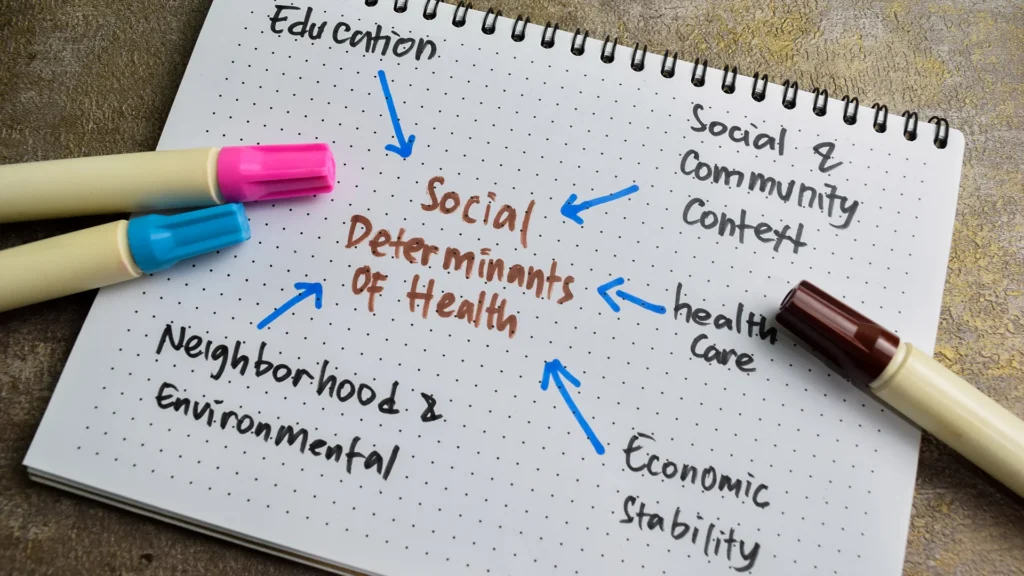
Social determinants of health are the nonmedical conditions that affect a person’s health, wellbeing, and ability to access care. They include factors such as housing, transportation, food access, income, education, social support, and the availability of healthcare services.
For home care providers, these factors can determine whether care can be delivered safely and consistently.
Social Determinants of Health in Rural Georgia
In many small towns across Georgia, access to healthcare is limited. Some communities do not have a hospital. Some do not have an urgent care center. Some may have only one or two doctors and no dentist. Residents may have to travel 45 minutes or more to reach a hospital, and even then, the nearest facility may not have the level of specialty or trauma care needed in an emergency.
In these communities, social determinants of health are not abstract policy terms. They are everyday realities.
If an older adult does not have reliable transportation, they may miss medical appointments.
If a person does not have air conditioning during a Georgia summer, existing health conditions may worsen.
If a home has mold, pests, or other unsafe conditions, caregivers and nurses may not be able to provide care safely.
If a rural community lacks healthcare infrastructure, families may delay seeking help until a situation becomes urgent.
For home care providers, these issues are not separate from the business. They directly affect whether care can take place.
Why Social Conditions Affect Home Care Operations
A provider cannot deliver consistent care if the home environment is unsafe. A caregiver cannot remain engaged if every visit places them in difficult or unsupported conditions. A patient cannot remain stable at home if basic needs are unmet. A home care organization may also find it difficult to grow sustainably when the communities it serves are medically underserved, economically strained, and disconnected from essential resources.
This is why social determinants of health should be connected to organizational strategy, operations, workforce planning, and long-term growth.
Home Care Teams See What Happens Between Medical Visits
Home- and community-based providers are often the eyes and ears inside the home.
A physician may see a patient during an office visit. A hospital may see the patient during an emergency. Caregivers, aides, nurses, and home care teams see how people actually live.
They may see:
- Whether there is food in the refrigerator
- Whether medications appear to be taken as directed
- Whether the home environment is safe
- Whether the family caregiver seems overwhelmed
- Whether transportation is available
- Whether the person has social support
- Whether follow-up care is realistically accessible
That information has tremendous value. If captured and communicated properly, it can help physicians make better decisions, help families access resources earlier and help prevent avoidable hospitalizations or health declines.
The Business Value Is Not Always Easy to Measure
From a business standpoint, the return on investment is not always easy to calculate in a simpe dollar amount. Healthcare providers still have to operate financially sustainable organizations. Payroll, margins, reimbursement, staffing, and operational efficiency all matter.
But in home-based care, doing good and running a strong business are not opposing ideas. They can support one another.
When a provider helps a person remain stable at home, that patient may avoid unnecessary hospitalization.
When a caregiver can continue working safely in the home, the position is more likely to remain staffed.
When a family receives appropriate guidance and support, caregivers may avoid burnout.
When a community gains stronger access to healthcare and social resources, it may become better positioned to attract and retain families, professionals, educators, and businesses.
The impact is circular.
Better healthcare access can support economic development. Economic stability can improve schools, jobs and housing. Stronger communities may attract more professionals, which can further support the local economy and expand access to services. And a healthier local economy can create better conditions for families to thrive.
This is why rural health access should be viewed as both a community responsibility and a business consideration.
Home Care Providers Can Serve as Community Connectors
Home care providers who understand this can position themselves not only as care companies, but as community infrastructure companies. They become connectors. They link families to services. They partner with physicians, hospitals, churches, nonprofits, pest control companies, transportation providers and local leaders. They help solve the practical problems that determine whether care can actually happen.
These partnerships can help address some of the practical barriers that determine whether care can happen safely and consistently.
This does not mean that a home care provider must directly solve every housing, transportation, or financial problem. It means the organization should understand which problems affect care and know where families and staff can turn for additional support.
A Home Safety Problem Can Become a Care Access Problem
Consider a home with bed bugs.
From a narrow business perspective, a provider may simply say, “We cannot send staff into that home.” That may be the correct immediate safety decision because caregivers could carry the infestation to other homes.
But from a broader social determinants of health strategy, the question becomes: what needs to happen so care can resume safely?
That may require partnering with pest control companies. It may require coordinating with family members. It may require the provider to absorb some cost or sacrifice some profit in order to help remediate the issue.
On paper, pest control is not health care.
In reality, it can determine whether a patient continues receiving care, whether a caregiver remains employed and whether a vulnerable person stays safely in the home.
This is where providers must think differently.
Addressing social determinants of health requires a willingness to look beyond the traditional boundaries of health care. It requires seeing the full ecosystem around the patient. It requires understanding that a home care visit does not happen in isolation. It is connected to housing, transportation, food, income, family support, education and community resources.
Social Determinants Affect Caregiver Retention
The conditions inside the home also directly affect workforce retention.
Caregivers working in low-income or high-need communities may face difficult environments. They may walk into homes without air conditioning, homes with pests, homes with safety hazards or homes where family stress is high. If providers do not acknowledge these realities and create support systems, caregiver burnout will increase.
The answer is not to avoid hard communities. The answer is to prepare teams, build partnerships and paint a realistic picture of the work.
Care teams must understand that some people live on top of the hill and some people live at the bottom of the hill, but the standard of care must remain consistent. That mindset can help create purpose. But purpose alone is not enough. Providers must also equip their teams with training, escalation pathways, safety protocols and community resources.
Social Determinants of Health Are Operational Issues
A practical social determinants of health strategy should answer questions such as:
- What happens when a home is unsafe?
- Who should a caregiver contact when a client lacks food?
- How should the provider respond when transportation prevents medical follow-up?
- Which community partners can assist with housing, utilities, pest control, nutrition, or social support?
- How should relevant information from the home be communicated to clinical partners?
- How can the organization protect staff while continuing to serve vulnerable clients?
These are not side issues. They are operational questions that affect staffing, safety, quality, continuity, and growth.
The Future of Home Care Depends on More Than a Task List
For home care providers, the future of care will be shaped by how well they address the non-medical factors that drive health outcomes. The providers that succeed will be those that understand care does not begin and end with a task list. It begins with the person, the family and the environment they live in.
Social determinants of health are about access. Access to care. Access to education. Access to transportation. Access to safe housing. Access to economic opportunity. Access to dignity.
When providers help solve access issues, they do more than improve individual outcomes. They strengthen entire communities.
That is why social determinants of health are not just a clinical concern.
They are a business strategy.
And for providers committed to rural health, aging in place and community-based care, they may be one of the most important strategies of all.
Primecare’s Role in the Community
Primecare Home Care recognizes that access to safe housing, transportation, food, family support, and healthcare can affect a person’s ability to remain at home.
Primecare does not operate a dedicated social determinants of health program or directly provide services such as housing assistance, transportation, food support, or pest remediation. However, our home care teams and referral relationships give us insight into the practical challenges that families and caregivers may face.
As a home care organization serving Georgia and Indiana communities, Primecare remains committed to compassionate service, clear communication, and working with families and healthcare partners to identify appropriate next steps.